Leading Precast
Contact Sales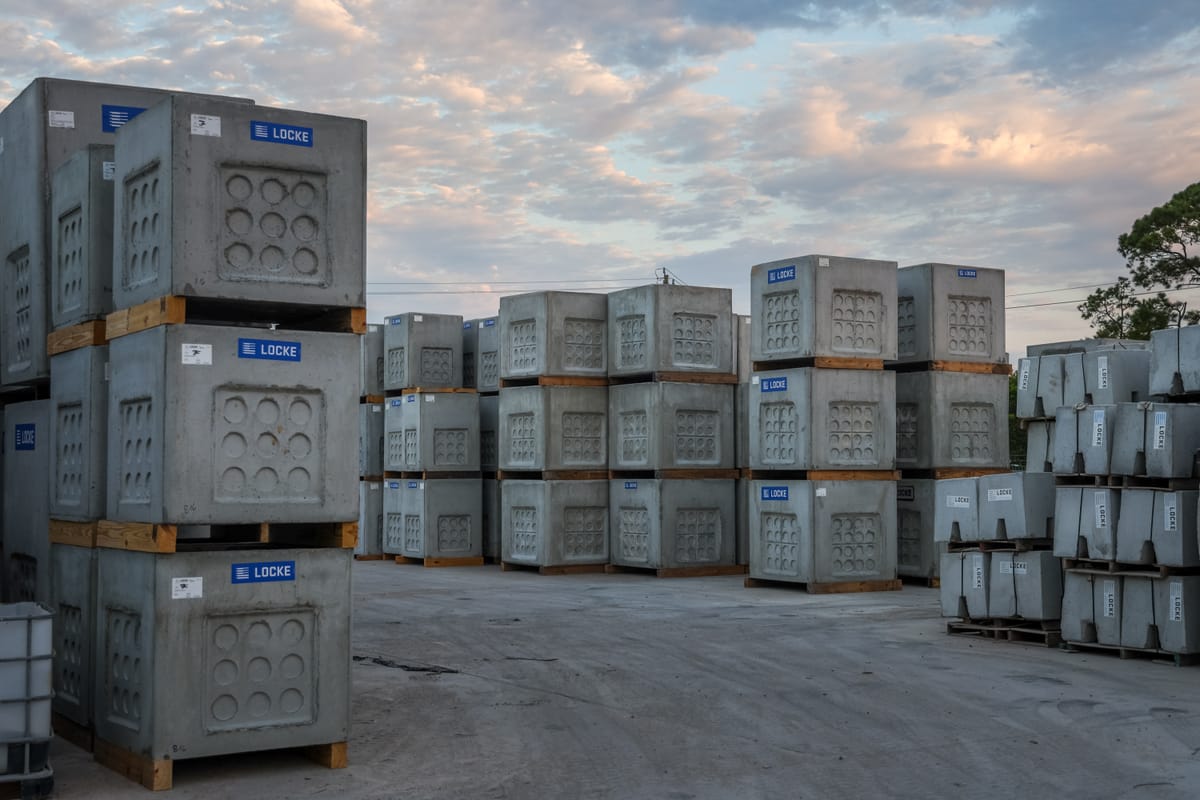
Learn how precast concrete can streamline construction, reduce on-site work, and simplify the process from engineering through delivery.
When it comes to underground concrete structures, how they’re built can make a significant difference in project schedules and the work that takes place on-site.
Traditional cast-in-place concrete requires crews to form, pour, and cure concrete directly at the jobsite. Depending on the project, this process can involve extended excavation time, weather-related delays, dewatering, and multiple stages of work before the structure is ready.
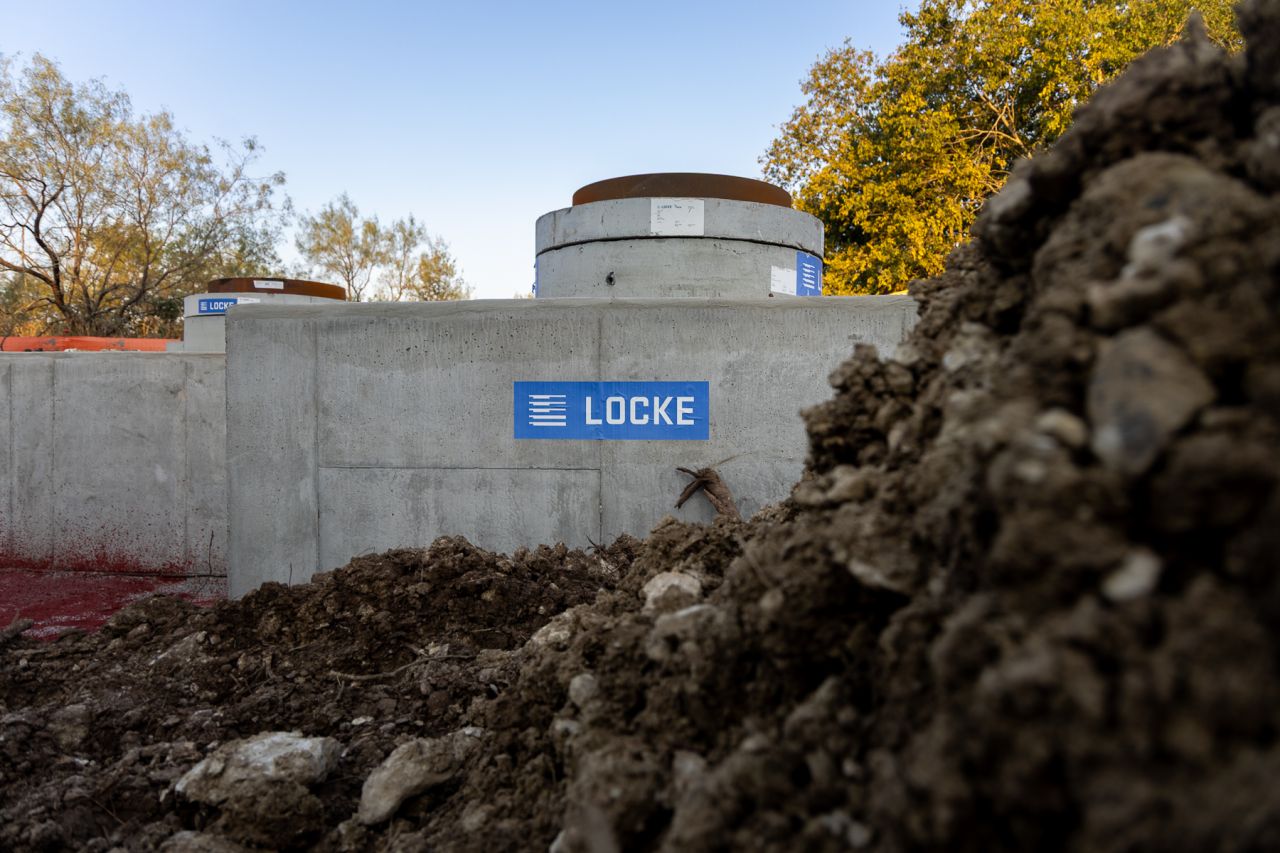
Precast concrete offers a different approach. Structures are manufactured and cured at a production facility before being delivered to the jobsite, helping reduce the amount of work required in the field.
Precast vs. Cast-in-Place: What’s the Difference?
Both methods use concrete to create durable structures, but the construction process differs.
With cast-in-place concrete, crews typically excavate the area, prepare the subgrade, set formwork, pour the concrete, and allow it to cure. Once the concrete has cured, the forms can be removed and the next stages of construction can proceed. Depending on the structure, additional pours and curing periods may be necessary before the work is complete.
Precast concrete shifts much of that work away from the jobsite. Structures are manufactured and cured in a controlled production environment, then delivered ready for placement.
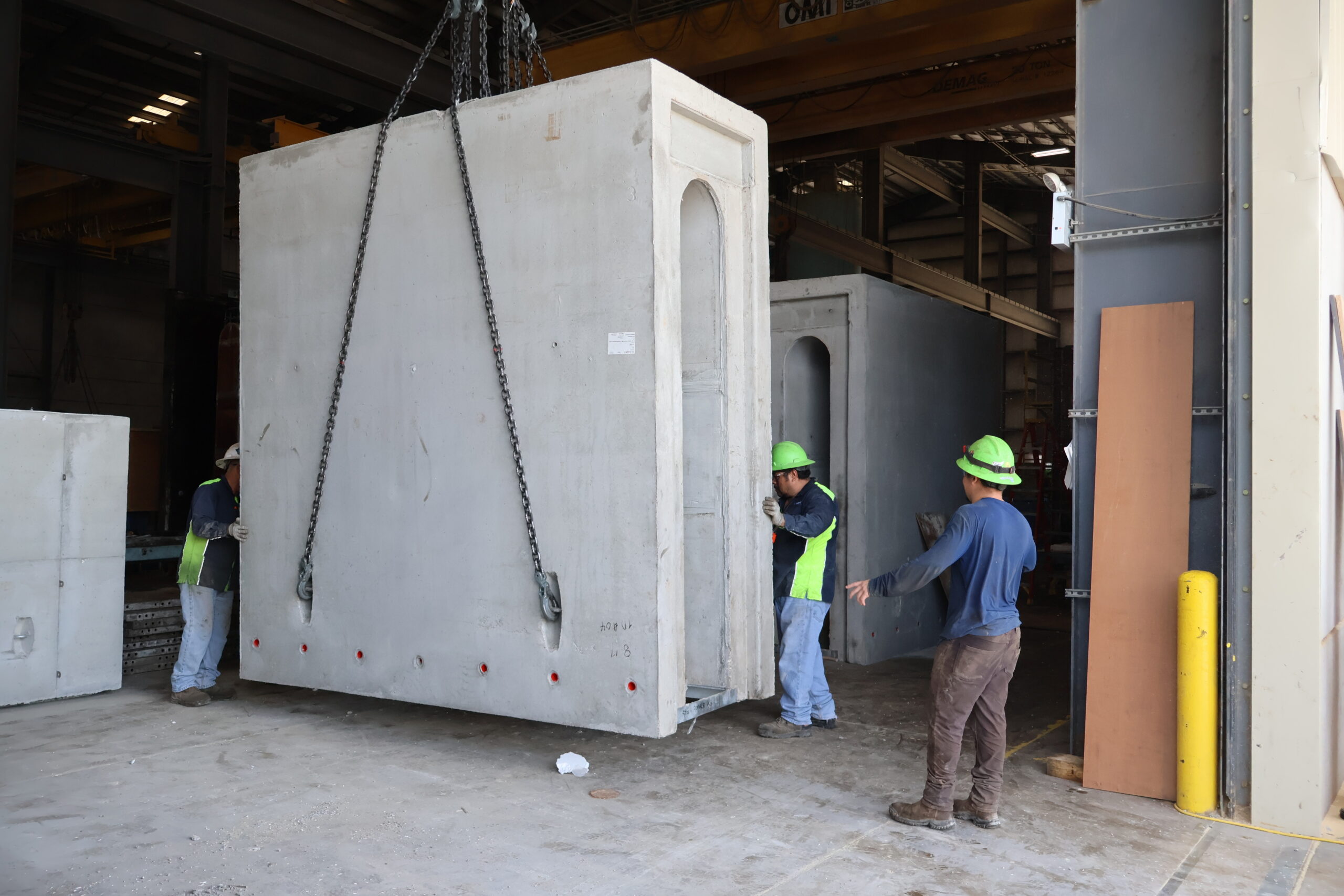
For underground structures, this can significantly simplify the construction sequence. Instead of coordinating several stages of concrete work in an open excavation, crews can focus on preparing the site, setting the precast structure, and backfilling.
A Difference You Can See in the Schedule
The time required to complete on-site concrete work can affect the rest of a project.
For cast-in-place construction, the entire process can take typically take 2-4 weeks compared to setting a precast structure in a single day.
Actual timelines depend on the project and installation requirements, but the difference highlights an important advantage of precast: less time spent completing concrete work in the field. By moving manufacturing and curing off-site, precast can help reduce scheduling complications and allow crews to focus on the next phase of construction.
The Full Scope: From Requirements to Set in Place
Choosing precast is only part of the equation.
At Locke, our process is designed to carry the structure from initial requirements through production and delivery, with timely communication throughout each stage. Although we don’t perform on-site installation or geotechnical design, we can help guide your team and connect you with the appropriate resources for those needs.
Here’s how it works:
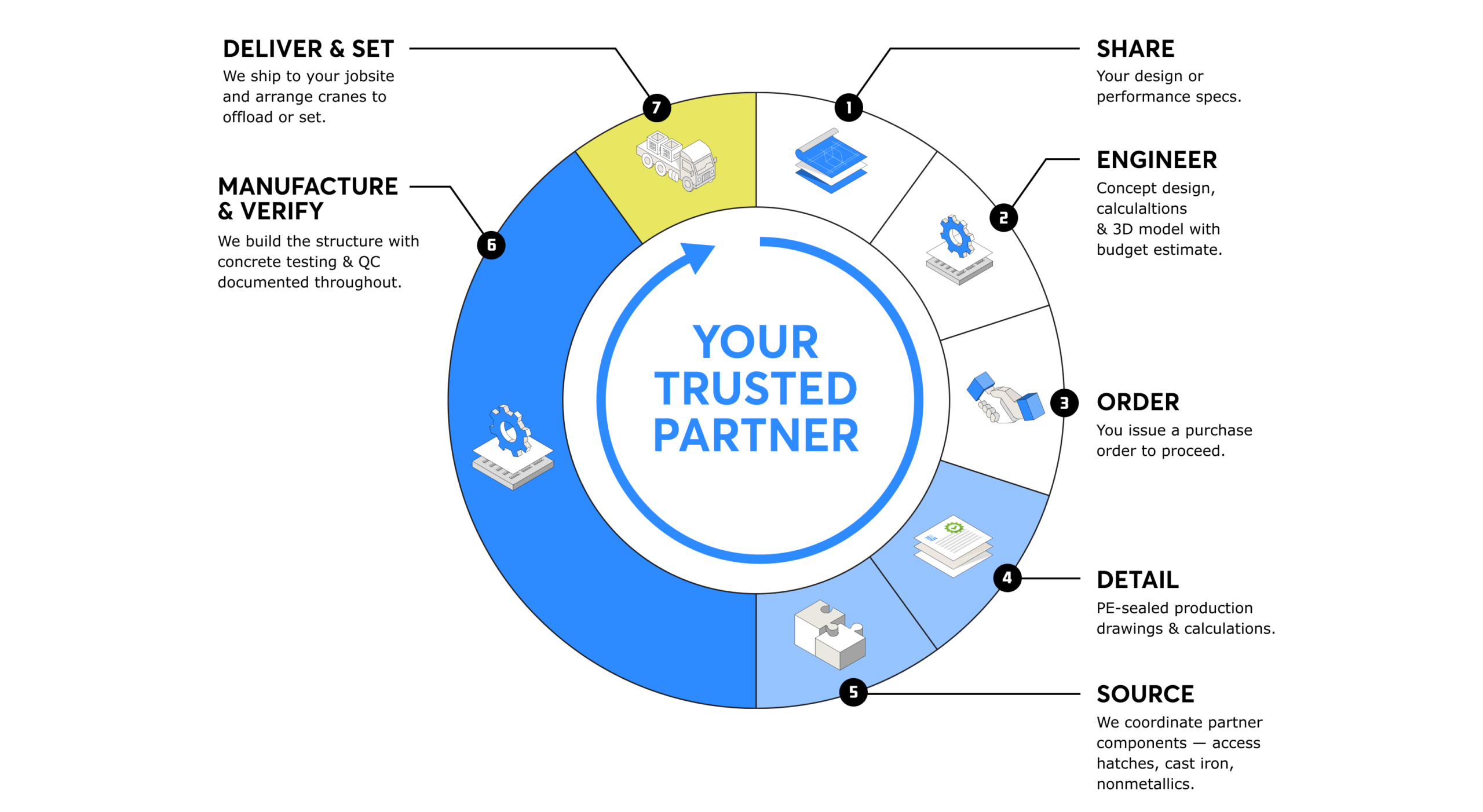
- Share: Every project begins with an understanding of what is needed. Share your design or performance specs.
- Engineer: The next step involves concept design, calculations, and a 3D model, along with a budget estimate.
- Order: Once you’re ready to move forward, you submit a purchase order to get the process started.
- Detail: Our team of professional engineers prepares the production drawings and calculations needed to manufacture your structure.
- Source: Some projects require additional components, such as access hatches, cast iron, and nonmetallic materials. We coordinate with our partners to source these components and ensure everything comes together for your structure.
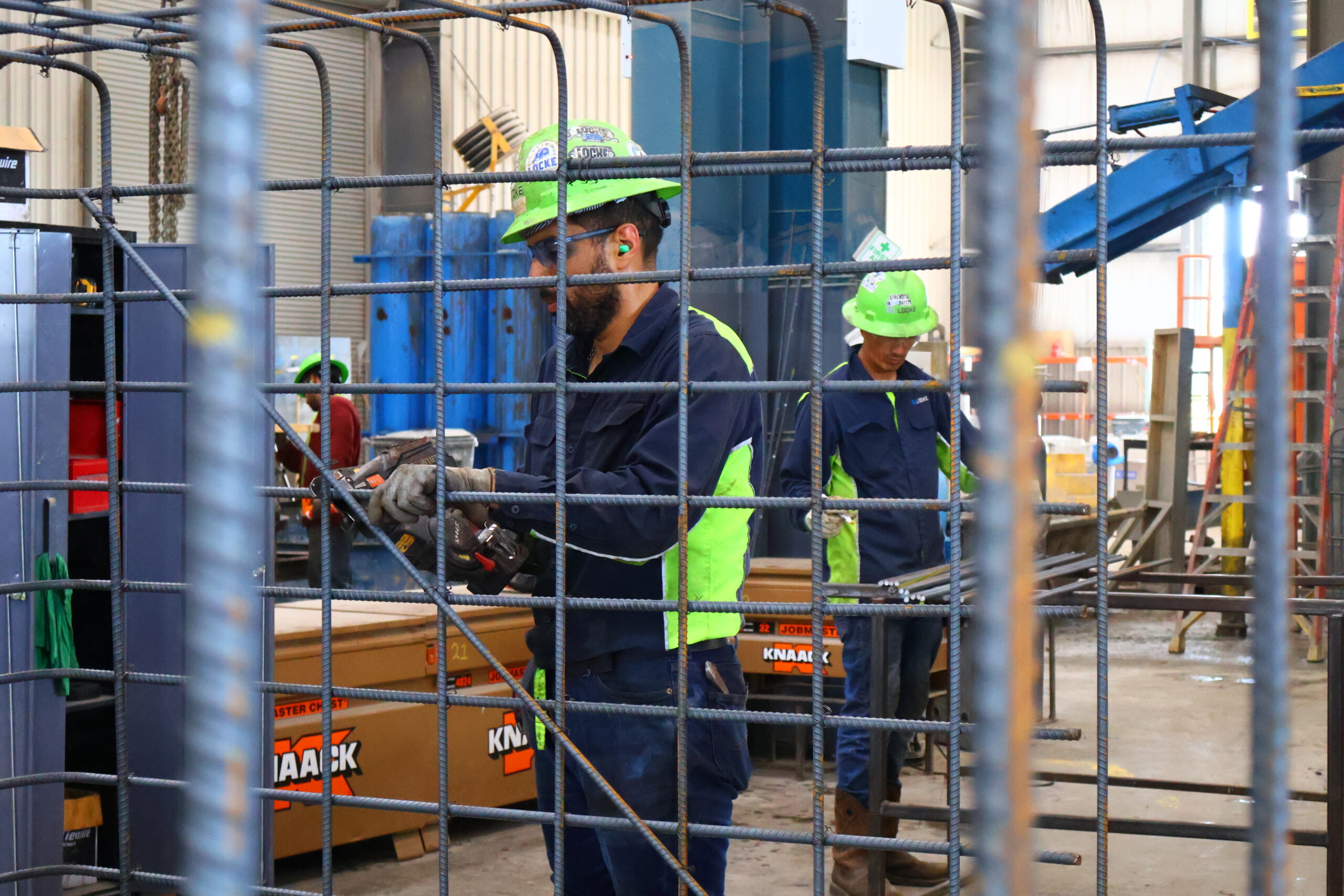
- Manufacture & Verify: The structure is built with concrete testing and quality control documented throughout production.
- Deliver & Set: Once ready, Locke coordinates delivery to the jobsite and arranges cranes for offloading or setting the structure.
Let’s Build
Precast concrete offers a practical alternative to traditional cast-in-place construction, helping simplify on-site work, reduce time in the excavation, and keep projects moving.
With Locke, you have a team coordinating the process from initial engineering and manufacturing to quality control and delivery. Whether you’re in the early planning stages or ready to move forward, we’re here to help you find the right solution for your project.
Let’s build something together.
Tell us what you need. We’ll work with you to determine the next steps.